Monday, May 21, 2012

A FINER POINT

Randy Wood...owner of Mira/Surrey with Betty Chiapetta

It is definitely time to make a far finer point out of how desperate Randy Wood and Betty Chiapetta were over the disaster they were facing by not being able to release the original Songs Of Protest album by Chris Ducey. Bobby Jameson's actions in solving the problem actually saved the Mira/Surrey launch into Europe. Had Mira/Surrey not been able to salvage the album, the entire Surrey line would have gone down in flames. This is not an overstatement, but a fact. The entire deal would have collapsed otherwise. If this is true, which it is, then Bobby Jameson's work in reinventing the album from stem to stern must be viewed as being directly responsible for accomplishing the company's successful outcome and ultimate expansion.

Overtime, far too many people with no connection or real knowledge about this subject have continued to spew forth their personal opinions regarding something they know little or nothing about. They were not there; I was. The original Ducey record was not released because it had legal problems. Fortunately, Ducey had legal representation and they prevented Mira/Surrey from releasing the album. That fact is what caused the snag in the first place for Mira/Surrey. The newly minted Jameson version was then released in place of the Ducey version with even more critical legal problems. But Jameson, unlike Ducey, was not represented by anyone, and was incapable of preventing the album's release. Be that as it may, it was the Jameson version, as Chris Lucey, that saved the entire Surrey line from collapse before it even got off the ground.

Think for a moment, if you will, what it would have meant to Mira's reputation as a record company, and to the reputation of Wood himself, as well as Chiapetta, if the Surrey deal had actually failed. They would have been harmed in a myriad of ways, but managed to save themselves from that catastrophe because of a kid named Bobby Jameson who resurrected the entire album. Wood and Chiapetta were in no position by then to continue looking for someone else to do the job. They had already run out of time when Jameson was brought in.

The facts, as they truly existed in 1965, were explained in depth to Bobby Jameson by Randy Wood the first time the two met. Randy, in no uncertain terms, said he was up against the wall over the problem he was facing, and was being forced by circumstances to rely on Jameson's ability to salvage the wreck threatening Mira/Surrey. Bobby Jameson was Randy Wood's last ditch effort to prevent such a catastrophic failure from happening. The entire company knew that the Surrey deal would fail if the album, Songs Of Protest And Anti-Protest, failed. That was the pressure. The pressure on Mira/Surrey as a company, and the pressure on a twenty-year-old flat broke kid named Bobby Jameson, who was willing to give it a try.

Bobby Jameson was not being sought after as an artist or writer by anyone in 1965. He just happened to meet Pam Burns, Randy Wood's secretary, in Hollywood. Pam became fond of Jameson and learned he could write songs and sing them. Because Mira was faced with the Ducey problem, and had already come up with the Lucey fix for the Ducey album jacket, which happened before Jameson ever stepped foot in Mira's office, Pam knew that finding someone to write and record ten new songs was a priority. After Wood and Chiappetta repeatedly failed at getting someone to do the job, Pam Burns began pestering Wood about this kid she'd met. Like it, or believe it or not, Bobby Jameson was brought to Mira for one reason and one reason only: To save the Songs Of protest album so it could be used to finalize the Mira Surrey expansion into Europe.

It probably sounds like impossible nonsense to some who think they know what went on back then, but the truth is, a twenty year old kid was given a job that the entire company's reputation depended on. I agree, it sounds implausible, but in my mind back then it was far simpler. Just write ten songs to this guy Ducey's titles and then sing em in the studio. That's what I was good at, writing songs and singing them. I didn't care what their business problems were, I just knew I could come up with the songs and do a good job recording them. I thought the whole thing sounded pretty weird, but if that's what they wanted me to do, then that's what I'd do.

What I did know, was that Randy Wood was like an animal that everybody was afraid of. He didn't talk to people, he told them things, and expected them to accept what he told them. He was pretty damn colorful, and forceful, but I'd already been through Tony Alamo's bullshit, and Andrew Oldham as well, not to mention Brit Record's, so I wasn't intimidated by him. He seemed exactly like the others I'd had to deal with. Randy didn't like that about me, my brashness, he damn near told me to kiss off because of it, but he couldn't, because he needed me, and that bothered the shit out of him.

For some to now presume that I did the job I did in 1965 for Mira, and knowingly and willingly give up all of my rights to my songs and performance as Chris Lucey is about as far fetched a reach as I can imagine. There was no verbal agreement or written agreement saying, I Bobby Jameson knowingly and willingly give up all my rights to this work, and as I have stated, I was not represented by anyone in this matter at the time it took place.

Saturday, May 19, 2012

CHRIS LUCEY: WHAT REALLY HAPPENED

At twenty years old I returned to America after making All I Want Is My Baby/Each And Every Day with Mick Jagger and Andrew Oldham in London, for which I wasn't paid a penny. I was also not paid for I'm So Lonely/I Wanna Love You on Talamo Records. My point is, I was flat broke. In 1965 I was wandering the streets of Hollywood alone trying to eat and find a place to sleep from day to day. It is in that context that I was introduced to Randy Wood at Mira Records by Pam Burns. Randy and his partner Betty Chiapetta were involved in launching a budget label, Surrey Records, in Europe, but they'd run into trouble with one of the albums scheduled as part of the deal. The album was called Songs Of Protest And Anti-Protest and had been written and performed by an artist named Chris Ducey. Mira/Surrey had run into contractual problems with Ducey's other commitments with ABC, so the Ducey album could not be used, which in turn halted the entire launching of the Surrey label in Europe, and here's why.

It is important to note that Ducey was the writer as well as the artist, and that he was fully represented by counsel and management in the Mira/Surrey matter.

The cover of the Ducey album was actually a picture of Brian Jones from the Rolling Stones, not Chris Ducey. It was used because a lot of people just plain liked the photo, particularly the people in Europe who were involved in the Surrey deal with Mira/Surrey Records. When they were advised the album was no longer available they balked and told Wood/Chiapetta that without that album the entire deal was dead. Surrey was a budget label, as I said, which meant the Surrey albums would be sold in store bins that were visible to patrons at cut rate prices. The cover of the Ducey album was thought to be perfect for this purpose because of the photo, and without it the deal would not happen.

So there was Mira/Surrey at a standstill, trying to figure out how they could save their business expansion into Europe. The whole thing was on hold until the problem could be resolved. To make matters worse, the album jacket had the titles of ten Ducey songs printed on it, adding to the difficulty of trying to salvage the cover for any use at all. Here's what they did! The printer of the original Ducey cover said he could color out part of the D in Ducey and make it into and L, which would change the name to Lucey. OK! One problem solved, but how were they going to deal with the ten song titles printed on the jacket?

Wood and Chiapetta decided they would come up with ten new songs written to the already existing titles on the cover and that would solve another problem. Pretty clever, eh? Now they were faced with the difficulty of finding someone to write ten new songs, but also having to find an artist to record the ten new songs, which meant spending more money recording a brand new record. As you can see, this was a unique way of keeping this particular cover in play, but was the only way to save the entire  Mira/Surrey deal.

Marshall Leib, of Teddy Bears fame with Phil Spector, and a friend of Wood and Chiappetta, was rounded up to produce what would be the new album, now called Songs Of Protest And Anti-Protest by an artist named Chris Lucey who didn't yet exist. This was their last and most difficult task to insure that the Surrey deal didn't fail. Find someone to write and record ten new songs, and do it now, because the time factor was breathing down their necks.

Randy Wood and Betty Chiapetta could not find anyone to do this job. They were hamstrung for a few reasons: Time, and the fact that nobody wanted to be someone called Chris Lucey on a budget album for Europe. Thirdly, Surrey wasn't offering anything monetarily to convince anybody to change their mind and take on the job. Remember! Surrey needed an artist and a writer. After a significant amount of time Wood and Chiapetta were desperate. It was then, and under those circumstances, that Randy Wood agreed to meet Bobby Jameson, who Pam Burns, Randy's secretary, had befriended on the streets of Hollywood. She was convinced that Jameson could do the job and had tried repeatedly to convey that to Randy Wood.

OK! Let me be clear as a bell here, and I am going to write this part in the third person for a reason. The circumstances in 1965, when Bobby Jameson first met with Randy Wood, were that Bobby Jameson was twenty years old, flat broke, and unrepresented by counsel or management. Now recall, if you will, that representation was significant with regards to Ducey's involvement and subsequent withdrawal from the project. Jameson didn't have more than five bucks to his name and no place to live. He was on the street. It is important to place in context the actual conditions of Bobby Jameson's life at the time this happened before embarking on the story of Wood's and Jameson's meeting.

Randy Wood knew full well that Bobby Jameson was broke, homeless, and sleeping on people's couches. His only interest in Jameson was whether or not this 20 year old kid could write a song and sing it in in the studio, and do it well enough to put it on vinyl for the purpose of saving Mira Record's ass with the Surrey Record's launch. That was it! That was Wood's position. He knew Bobby Jameson wasn't represented in any way by anyone other than Pam Burns, and he relished that fact after the Ducey problem, and used it to his own benefit. Randy Wood was the past president of Vee-Jay Records. He had a heavyweight reputation, and now owned Mira/Surrey. He was an experienced professional and had an office on Sunset Blvd. filled with people who worked for him and a cutthroat attorney named Abe Somer. Collectively the Surrey group knew every in and out there was to know about the business side of the music industry, while Jameson, on the other hand, was no more than a kid who knew little. The fact that Bobby Jameson had no manager or lawyer and was limited in his understanding of the business side of music, made it easy for Wood and Somer to control the situation in their favor, which they did. It was an unfair advantage in the favor of Randy Wood, Betty Chiapetta, and Abe Somer. All Bobby Jameson knew was he could write songs and sing them.

There was no agreement with Mira/Surrey Records entered into by Bobby Jameson at anytime, verbally, or in writing. Bobby Jameson never agreed to write songs and knowingly give up his rights to them. Nor did Bobby Jameson ever knowingly give up his rights to his performance as the artist, Chris Lucey. If anything, these issues were proposed unexpectedly after the fact by Mira/Surrey in a lengthy exclusive artist/writer contract in Randy Wood's office in the presence of Abe Somer, Randy's attorney. The contract they proposed would have tied Jameson up for seven years without a penny, and make it impossible for him to seek work elsewhere. Bobby Jameson refused to sign that contract because it offered nothing to him, and because he felt incapable of understanding, without counsel, all that was was actually said in the contract. Randy Wood, incensed that Jameson refused to immediately sign the contract, physically threw Bobby against an office wall, demanding that Jameson sign it, which Jameson again refused to do. Bobby said he needed to get someone to read the contract before he signed it, to which Wood's angrily replied, "There's no time for that. This album is already released!" Wood was referring to his Mira/Surrey deadline deal with Europe.

Jameson's need, and verbal request, for some form of legal representation at the time, and help in understanding the Abe Somer penned document, was disregarded completely. That fact alone should have legally put the entire album on hold until it was sorted out, in the same way the Ducey version had been withheld from release for similar reasons. But Bobby Jameson didn't have what protected Ducey in his dealings with Mira/Surrey. Bobby had no lawyer or manager who could negotiate for him. Bobby Jameson was by himself in that office at twenty years old with no representation at all, so he refused to sign the agreement for good cause.

Almost immediately thereafter, in what can only be considered a criminal act of theft and fraud, as well as a conspiracy to defraud and harm an individual (Bobby Jameson), Mira/Surrey knowingly and with purposeful intent released Songs Of Protest And Anti-Protest anyway. Without any sort of agreement with Bobby Jameson as writer, or artist, Mira/Surrey acted in it's own self-interest and released the record as a means of fulfilling it's own jeopardized agreement with the European expansion of Mira/Surrey Records. The album contained the ten stolen songs written by Jameson that were registered as belonging to Mirwood Music, an act which had been done in secret without Jameson's knowledge or approval. The master recording of Songs Of Protest And Anti-Protest by Chris Lucey is evidence of a crime. The album has been treated by the owners of Mira/Surrey Records, Mirwood Music, and all those persons involved in those companies, and their successors, as their own private and personal property to do with as they please, with a callous and criminal disregard for the harm done to one Robert Parker Jameson, aka Bobby Jameson, aka Chris Lucey, who created the work in good faith.

To put it bluntly, Bobby Jameson saved the Surrey Record's launch into Europe. He made Randy Wood, Betty Chiapetta, and Abe Somer look good. Without Bobby Jameson's songs and voice as Chris Lucey, Surrey Records would not have expanded into Europe. As a result of his work on the Songs Of Protest project Jameson was given $200. His songs were stolen by Wood, Chiapetta, and Somer and registered to Mirwood Music without his knowledge or permission. He has never received a single royalty as the artist or writer for any of that work. As well, Girl From The East, which came from Songs Of Protest by Jameson/Lucey, was used as the b side of Mira Record's single release and album Hey Joe, by The Leaves, where again Jameson received no royalty as the writer.

The album, Songs Of Protest And Anti-Protest, should not have been released by Mira/Surrey in 1965 until the rights of Bobby Jameson were legally sorted out. But Mira/Surrey chose to ignore and hide this fact at the time in pursuit of their own needs, in spite of knowing the harm that would be done to Bobby Jameson. They were unmoved and unafraid of Jameson, because they knew he was a kid without anyone speaking for him and without having legal protections of any kind. They were, and are, convinced that his version of the facts and events were and are forever hidden from legal scrutiny with regards to the choices and decisions they (Mira/Surrey and Mirwood Music) made in 1965. To release the album, knowing what they knew, for the purpose of benefitting themselves financially and defrauding the creator of the works, is criminal. It is knowingly criminal and comes with the knowledge built into it that someone (Bobby Jameson) would be harmed. It is a conspiracy to harm for profit by criminal and deceptive means.

The continuance of the conspiracy has occurred and reoccurred for decades, with each successive release of the album, and collection of revenue from the stolen copyrights and sales of the record. This again was done without any revenue whatsoever going to Bobby Jameson. In recent years (2002) Betty Chiapeta again advanced this criminal endeavor by selling the master to ACE Records UK, who subsequently leased it to Rev-Ola/Cherry Red Records UK for the purpose of manufacturing, distribution and sale for profit. Again this was done by cutting out Bobby Jameson from any and all revenue created by his work known as Songs Of Protest And Anti-Protest. Wittingly or not, these new partners in crime are just that, because they have furthered the original intent of the conspiracy by joining it for the same purpose: To defraud Bobby Jameson out of any and all revenue from his own original work. In spite of the fact that Jameson has informed and and made clear all of these facts to all of the parties, they continue to malign his character and refuse to cooperate in the rectification of this serious matter, making them all co-conspirators under the law. In time this fact alone will make any settlement harsher for them with regards to punitive damages, which accrue with the passage of time, and their intentional refusal to end the harm to Bobby Jameson, aka Robert Parker Jameson, aka Chris Lucey. They are guilty of an intentional and knowing obstruction of justice.


Tuesday, April 3, 2012

One more small victory


CLICK ON PICTURES TO ENLARGE


This is a screen shot of an interactive video linked to facebook. It is called Take This Lollipop and has over 13,000,000 views.....I wrote and performed the song in 1963 and have finally been given credit along the bottom throughout the 2 minute length of the video.....No money.....but at least I got credit....it's a start...

Thursday, September 22, 2011

I WIN...ANOTHER LEGAL PRECEDENT IN THE BATTLE FOR THE RIGHTS TO MY WORK


from: Nicola Saunders
Subject: Re: color him in album by Jameson
Date: September 22, 2011 2:22:00 AM PDT
To: Bobby Jameson


Dear Mr Jameson,

Further to the correspondence below, I can confirm Color Him In will be removed from iTunes on 27th September 2011. This process takes 5 business days and cannot be done immediately, but please be assured that the process of removing this album has commenced and will be completed as soon as possible.

Please let me know if there is anything else you need.

Kind regards

Nicola  

Monday, September 19, 2011

Cease And Desist...COLOR HIM IN Illegally Hosted On Itunes


From: bobbyjameson@
Subject: COLOR HIM IN album by Jameson on itunes
Date: September 19, 2011 3:45:47 PM PDT
To: enquiry@startentertainments.com
Cc: copyrightagent@apple.com
Reply-To: bobbyjameson@

I, Bobby Jameson aka Robert Parker Jameson aka Jameson hereby demand on this 19th day of September, 2011, that Start Entertainments Limited UK and it's subsidiary nostalgia music UK remove at once, from itunes music, my protected work COLOR HIM IN. I , Bobby Jameson aka Robert Parker Jameson, am the artist/performer, writer/composer, and publisher of this protected work. I own any and all rights to this work. Start Entertainments Limited Uk and nostalgia music UK have no legal rights or authorities of any kind regarding the aforementioned work COLOR HIM IN.

My telephone # in the U.S. is

I expect an an immediate response to this email.....Start Entertainments Limited UK and it's subsidiary nostalgia music UK are guilty of violating U.S. copyright law, International copyright law, and my rights, by alleging to itunes music, Apple Corp, or anyone, anywhere, that they have the legal right to claim ownership and or any rights whatsoever to the work COLOR HIM IN, which is the property, in it's entirety, of one Robert Parker Jameson aka Bobby Jameson aka Jameson.

Regards, Bobby Jameson aka Robert Parker Jameson aka Jameson

Wednesday, August 17, 2011

Songs....and Record Companies...

Copyright Law Record Industry Braces for Artists’ Battles Over Song Rights...click on copyright law for story.

Wednesday, June 8, 2011

Me and the internet

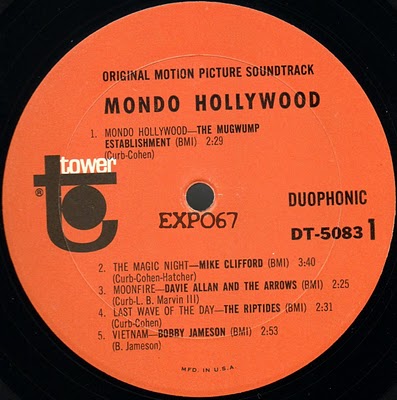
Below is a list of records I made in the 60's. I received nothing for these records with the exception of $200 for Songs Of Protest in 1965.

Click on any pic to make larger


Vietnam Mondo Hollwood


Tuesday, January 18, 2011

Early 45's Bobby Jameson

My first single from 1963...labled as Bobby James.


Second Talamo single 1964

Sunday, January 2, 2011

Bill Jameson Art Project by Bobby Jameson 2011


My brother Bill has been drawing and painting his whole life. He is a schizophrenic but continues to create art in one form or another to this day. In 1965 he wrote Too Many Mornings,"That's The Way The World Has Got To Be"(part 2) from the 1965 album Songs Of Protest And Anti Protest by Chris Lucey aka Bobby Jameson. These are his words set to music which I sang on that album. The pictures are his from various time periods.

Bill Jameson Art

Friday, December 24, 2010

Open Letter To Paul Williams....President of ASCAP....


The trouble with ASCAP is that it is run by people who are so successful that little people fall by the wayside, and are repeatedly unprotected and unpaid by the likes of ASCAP as well as BMI, and others. My personal experience with ASCAP and the others is so bleak....that I feel this message will be no more than a distant cry from the wilderness by one of those who has never been served, in any capacity, by the company you are now president of. The spotlight once again shines only on those who have been fortunate enough to be paid for their work, while others like myself have not...Bobby Jameson

Sunday, November 21, 2010

Keith Richards refers to Bobby Jameson as P J Proby's valet


All I Want Is My Baby by Bobby Jameson 1964


"It is not the remark by Keith Richards in his book that bothers me...it is the context that the remark was made that is troublesome."

Richards was being asked about Bobby Jameson, who in 1964 recorded a couple of early Rolling Stones' songs, All I Want Is My Baby and Each and Every Day of the Year. In his autobiography, Keith Richards refers to Jameson as "PJ Proby's valet".

http://www.theguardian.com/music/musicblog/2010/nov/10/savage-song-bobby-jameson

Richards and Oldham wrote "All I Want Is My Baby" and Bobby Jameson sang the lead vocal on both sides of that single. Keith is listed as the musical director on the record, while Oldham is the producer, with Jagger, Oldham, and Jameson all singing back up vocals.

"The real problem I have with Richards remark is that I was never paid a penny for doing this record. It was released as a single worldwide on Decca and London Records, and can be found on multiple albums of Rolling Stones involved work since 1964.

In the last forty five years I haven't gotten anything for it, so it seems belittling me at this point, after I already got fucked over by Oldham, Richards, Jagger, Decca, and whoever else has had anything to do with the record is a little pathetic.

If you're going to badmouth another artist I would suggest that it not be one you screwed out of any money you might owe him Mr. Music Director."

http://www.blooddirtandangels.com/index.php/2011/02/11/proust-p-j-probys-valet-my-uncle-philip-keith-richards-and-me/

* * *


ME, MICK, and ANDREW IN THE STUDIO

After some time, everybody ended up in the studio with Andrew. I had not heard anything up until then about what he wanted to work on with me, so it was a burning question in my mind.

For a couple of months, before ever coming to England, I'd wondered about what we would do and now was the time! I was about to be told what Andrew's ideas were and what my part in it would be. He said he was going to play me a track that he'd already recorded called "All I Want Is My Baby".

He signaled the engineer to roll the tape and I listened intently to what came out of the speakers. It sounded a bit like a Phil Spector track, but not as well organized. In the middle of the song was a guitar solo on fuzz tone, that at that time was pretty off the wall.

You gotta remember this was before Jimmy Hendrix and the feed back guitars of a year or so later. I liked the guitar thing but the song didn't sound like anything remotely close to what I did. The tape came to an end and Andrew and Mick looked at me in anticipation of my reaction.

"Well whatta you think Bobby, is that fucking great or what, man?" asked Andrew. I was stuck. I didn't want to say the wrong thing, but I didn't want to be forced to lie about my opinion either. "Yeah, well that's pretty cool, Andrew, and I really like that guitar part, but I don't know if it's my kind of song, I mean something that I'd do."

There was an uncomfortable moment. "Well let me play it again and show you how the vocal's supposed to go so you can get a better idea of what I want," said Andrew. "Ok," I said reluctantly.

I felt the world shifting again and I didn't know what to do except go along with him. I eyed Peter and Lee to look for support but they seemed unaware of my growing discomfort with the song. Andrew again signaled for the tape to roll and the song boomed out again through the studio.

Andrew had the lyrics and started singing them for me and Mick was filling in with back up chorus stuff. It was quite a spectacle. I tried hard to concentrate on what Andrew wanted and eyed the lyric sheet trying to sing what he was singing. I felt like shit inside and that old, "I don't want to do this," part of me was kicking my ass.

I just kept bearing down on the work in front of me trying to latch on to the feel of the song, but it was no good. I waved at Andrew to stop the tape so I could talk to him and the studio went quiet. "What's wrong Bobby?' he asked.

"Look Andrew, I said, "I don't think this is my kinda song. Can't I play you a couple of things I wrote so you can get an idea of how I sing?"

He looked at me and said "No. I'm not interested in hearing your songs right now. I need you to concentrate on this song and get the vocal right, because I know you can."

He had said no and challenged me at the same time. He was trying to get me to go along with him, so I said "Ok play it again." The song played over and over and over. It got better, but I never thought it was much good. My vocals were just disconnected. I was jet lagged and miserable.

I was ready to walk out but stayed. Andrew suggested cutting my vocal with the track so I could get a better idea of what it sounded like by hearing it. I agreed and we pushed on. At one point Mick and Andrew teamed up on background vocals, as I sang the lead. After hours of working Andrew finally said that was enough.

"What a relief," I thought. I felt exhausted. Andrew seemed pleased about what we had done, but I was not. We had also worked on the b-side for awhile just to change the pace.

The song was Mick's and was called "Each And Every Day" and was easier to learn and sing than "All I Want Is My Baby", which Keith Richards had written. As we gathered our stuff together I shook everybody's hand and told Andrew that I was starting to get it and with a little more work we could probably record it.

He smiled and agreed and I felt somewhat better as Peter, Lee, and I departed. I don't remember if I ever talked to Andrew again after that day, but the rough track I was told was just for rehearsal was released on Decca records, as is, with a whole crap load of publicity and there was nothing I could do about it.


Each And Every Day by Bobby Jameon 1964